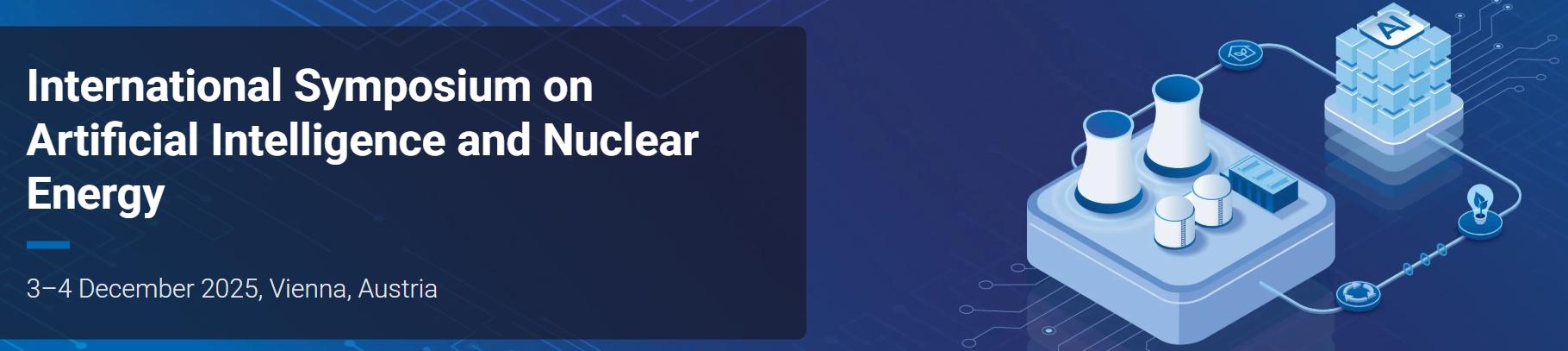
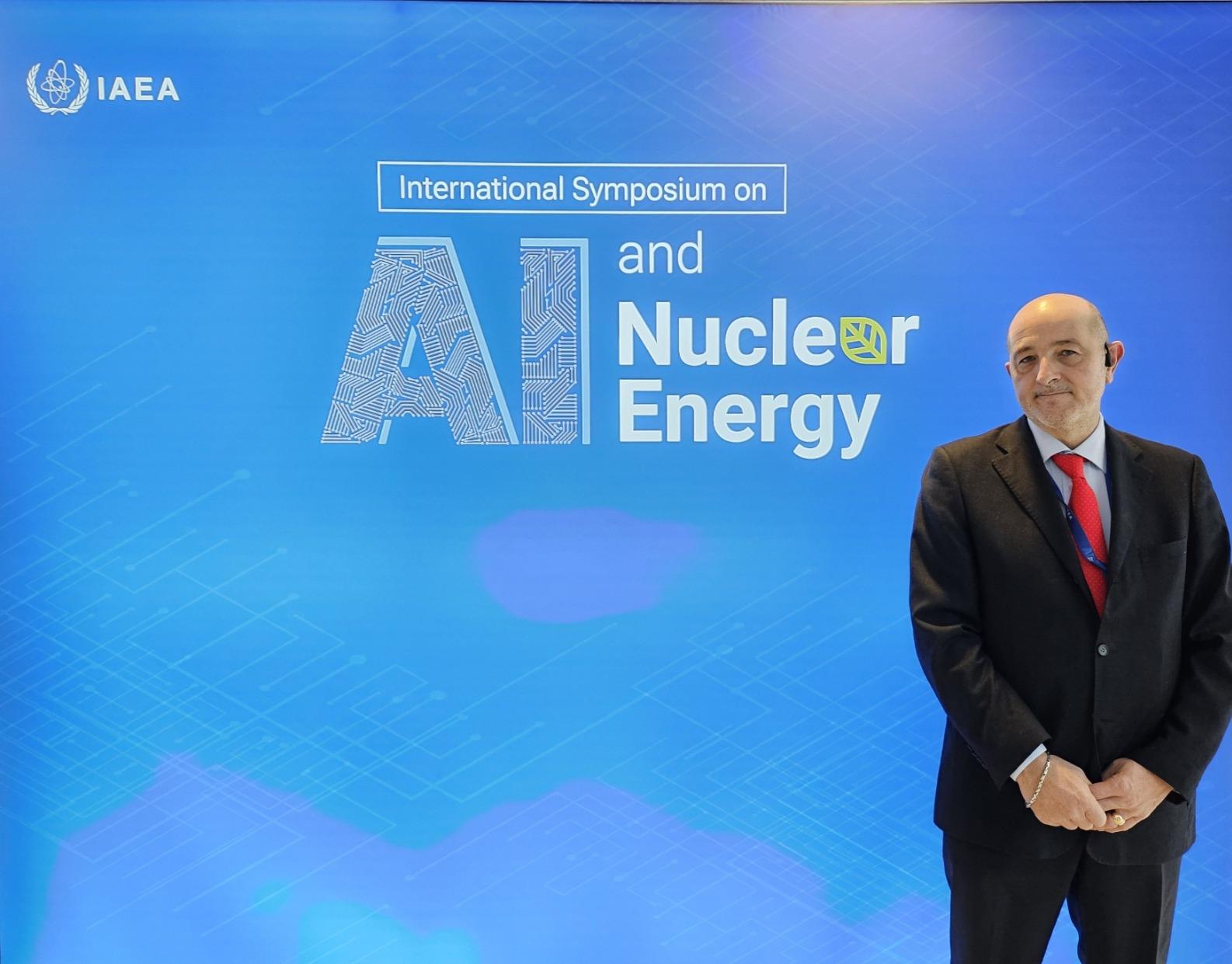
Earlier this week the International Symposium on Artificial Intelligence and Nuclear Energy took place in Vienna, under the auspices of the International Atomic Energy Agency. A high-level event which has certainly had the merit to say loud and clear what we have been saying from this blog since its inception. A page has been turned, from now on the issue of the adoption of AI by the nuclear industry cannot and should not be ignored by all the players regardless of their position in the value-chain.
We knew already that nuclear energy is of fundamental importance if AI is to keep its promises, considering the present and future energy-consumption rates of datacenters around the world. But the event has largely been centered around the other side of the medal, the undeniable importance of Artificial Intelligence for the nuclear industry. From supply-chain certification to reactors’ operations, from SMR’s deployment to site licensing, it is impossible to conceive a Nuclear renaissance without a heavy and reasoned adoption of AI by the industry.
The merit of the Symposium has been not only to make this statement loud and clear worldwide, but also to begin addressing the details of what it means. Something we have also tried to do until now on this blog and which is actually the whole reason for its existence.
AI, sure, but which one?
First of all, AI is a broad term which encompasses several technologies, and not all are equally suited for the nuclear industry. Generative AI, Agentic AI, Machine Learning, each of these terms can mean different things; reliability of the solutions can differ a lot from one to the other, and because of the safety, security and IP protection concerns the nuclear industry experiences the implementation decisions can greatly vary. Most of the Symposium’s speakers have underlined this, and the obvious consequence is that nuclear players (utilities, suppliers, regulators etc.) need to acquire either internally or through trusted consultants the skills to navigate and orientate the final decisions. Besides, AI can hardly be defined as stable technology, innovation comes at a pace so fast that only experienced teams can ensure long-term technical and financial reliability.
But this also means that generic solutions – typical in current AI business models – will simply not be enough as far as nuclear is concerned. Each company will need to develop its own applications and solutions, scalability can be conceived only within closed environments (i.e. a reactor’s technology or a large utility’s ecosystem), while all-in-one AI suppliers will find it very hard to position themselves without a significant change in their business model.
AI,sure, but whose?
Then there is the issue of sovereignty. The interests within the nuclear industry are strategic both geopolitically and companywide, and the experience of other industries shows even too clearly how deep AI can absorb know-how, data, practices without users even acknowledging it.
AI in nuclear can only exist in the form of private-AI, and the burden to solve this equation is a burden both the nuclear and the AI industry will need to bear for the years to come.
Can hyperscalers’ platforms or even models be trusted when it comes to protecting a company’s IP or a state strategic interest in nuclear deployment? The marriage of AI and nuclear means combing two of the most strategic non-military interests any nation has, and AI suppliers will have to make several extra efforts to convince the nuclear industry. Simple slogans or references to “ethics-by-design” or autoregulation will not suffice.
The same goes as far as safety is concerned. Nuclear deals with extremely delicate materials and processes, the independence of regulators has to absolute as well as their power to band non-suitable applications. This may seem a severe limitation as far as the way AI suppliers are used to operate; but in converse it is actually a very interesting standard-setting environment, where only the best and the serious will succeed. If it can help the AI industry to become more responsible and careful about their products and solutions, it can only be seen as a welcome gift for an industry that has been too often left alone to decide what is right and what is not.